Property Taxes: Metro District tax revenues are limited by a fixed mill levy of 4.192. This mill levy cannot be changed without an official vote by registered residents of Crystal Park. You will be happy to know that this is one of the lowest in the State. Someday there could be an increase in the mill levy due to increased costs. The mill levy is detailed on your annual property tax statement from El Paso County. Property taxes, including specific ownership taxes, are income tax deductible, whereas HOA dues are not, and only those District members having a platted and deeded site pay property taxes. Note that not all Metro District members are HOA members, and vice-versa. In 2021, tax income to special districts was expected to go down statewide, but in Crystal Park, we actually increased our tax income due to new homes built in Crystal Park and an improvement in the housing market.
Donations and Fundraising: Donations of equipment, supplies and cash for the fire department are made to the Metro District so that donors may be eligible for charitable tax deductions. Fundraising revenue comes through an annual fundraising drive in October. In 2023, the fundraiser gave the department the ability to negotiate a lease purchase contract for a "new" (used) Water Tender. For 2024, donations to the District are estimated based on need, goals and past experience.
Grants: The Metro District acts on behalf of the CPFD to sponsor and administer grant funds for the department. Grants have become an important source of revenue, but in proposed budgets, these revenues can only be estimated and are "contingent" upon being awarded the grants for which we apply. This is an accounting mechanism recommended by the District’s CPA’s. These estimates may or may not actually occur, either as revenue or expenditures.
Pass through Funds: The Crystal Park Homeowners Asociation (CPHOA) provides funds to the District for vehicle insurance on one shared-use vehicles that is insured by the District.
Administration: These include fees and legal, accounting and miscellaneous costs associated with the administration of Metro District funds.
Insurance: The District pays for continuing costs including workers compensation insurance for all department members, liabilty, and equipment/vehicle insurance.
Multi-use Building Expenses (MUB): Under an agreement with the CPHOA, the Metro District now assumes all costs for operating and maintaining the MUB/Fire Station. The Board voted to fund the installation of a bathroom, especially to support the use of the building as a shelter-in-place in case of wildland fire.
Fire Protection Expenses: The Metro District’s primary function is fire protection, suppression and emergency medical services, and all expenditures reflect that. "Supplies, training, and other" expenses include matching local funds for grants and expenditures that are contingent upon receiving grants or donations. A large expense is the maintenance/purchase of radios, pagers and annual FCC license fees.
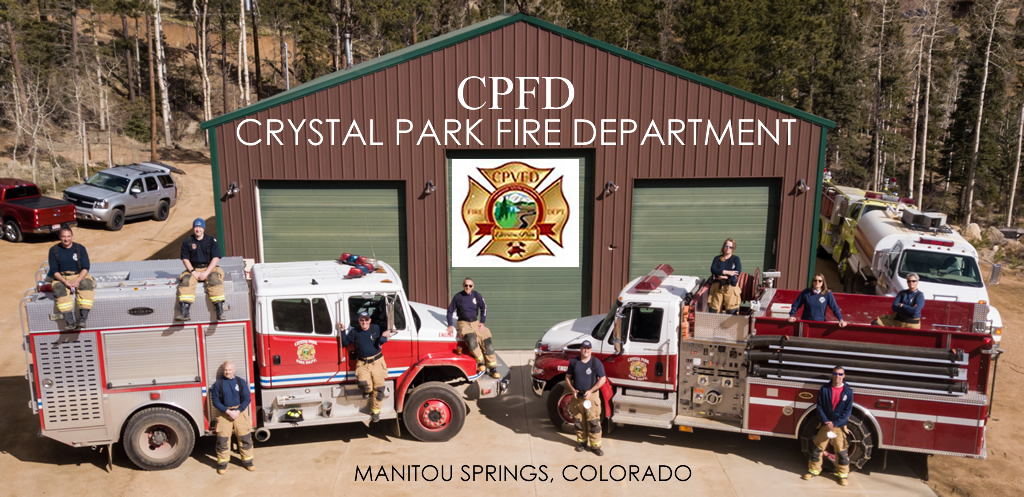
Capital Outlay: In the past, expenditures in this category largely consisted of installing cisterns and road/house signs and posts necessary to guide emergency responders. However, generous donations to the CPFD have allowed us to purchase two used pumpers that replaced two 1970's apparatus!! The Metro District installed a 10,000 gallon cistern in the middle park. Future p lans call for another 10,000 gallon cistern to be installed near the upper helicoptor pad. This will move the Department forward toward the goal of improving the District’s ISO rating and thereby reduce insurance premiums for all Crystal Park homeowners.
The Metro Board of Directors, in conjunction with the CPFD, continues to evaluate and identify more effective uses for revenue, consistent with its fire protection function, and at its discretion has adjusted or created budgeted allocations across existing or new expense categories. An example of this is CPFD efforts to improve water delivery and overall fire protection capabilities in the Park. In addition, certain expenditures dependent upon grants are also included in this category. These may or may not actually occur contingent upon receiving grants.